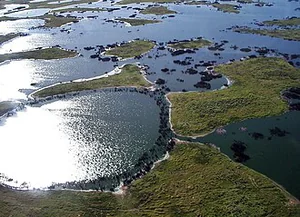
Forget the Amazon for a moment. There’s a place in Brazil where the sky meets the water in a mirror of blue and gold, where jaguars prowl riverbanks as if they own them, and capybaras lounge like furry riverboat captains. This is the Pantanal, the world’s largest tropical wetland, and it’s nothing short of a living, breathing epic. Stretching across western Brazil into Bolivia and Paraguay, this vast floodplain covers an area roughly the size of Portugal. But don’t let the word ‘wetland’ fool you—this isn’t a murky swamp. It’s a mosaic of shimmering lagoons, winding rivers, savannas, and forests that transform with the seasons, offering one of the most spectacular wildlife shows on Earth.
What makes the Pantanal so famous? Simple: it’s one of the best places on the planet to see wildlife, and see it up close. While the Amazon is famously dense and elusive, the Pantanal’s open landscape is a stage. Here, you’ll spot giant river otters wrestling in the shallows, toucans flashing their absurd, colorful beaks, and maybe—if you’re lucky—a jaguar lounging on a sun-warmed sandbar, looking like a golden god. Birdwatchers go weak-kneed: hyacinth macaws, jabiru storks, and roseate spoonbills paint the sky in improbable shades. For anyone who loves the wild, the Pantanal isn’t just a destination; it’s a revelation.
The story of the Pantanal begins deep in geological time, long before humans ever set foot here. About 2.5 million years ago, the Andes Mountains rose, and the land to their east began to sink, forming a massive depression. Over millennia, the Paraguay River and its tributaries carved a labyrinth of waterways, creating a system that fills with rainwater every summer and slowly drains away, leaving behind rich soils and a patchwork of ponds. Indigenous peoples, like the Guatós and Bororos, lived in harmony with this rhythm for thousands of years, building floating villages and fishing from canoes. To them, the Pantanal wasn’t just a place; it was a living deity that demanded respect.
European explorers arrived in the 16th century, but they mostly kept to the fringes, finding the flooded interior too hostile for permanent settlement. It was the bandeirantes—the rough-and-tumble Portuguese-Brazilian expeditions that combed the interior for gold and slaves—who first passed through in the 1700s. They found no gold, but they did discover something else: the land was perfect for cattle. Huge ranches, or fazendas, soon dotted the higher ground, and cowboys called pantaneiros learned to move cattle by horseback through knee-deep water. For centuries, this quiet cowboy culture shaped the region. But by the late 20th century, ranching began to threaten the delicate ecosystem. In the 1980s, a wave of environmental awareness swept through, and the Pantanal was declared a UNESCO Biosphere Reserve. Today, eco-tourism and conservation work hand-in-hand with the local ranching heritage, and that blend is part of the place’s magic.
So you’ve decided to visit. Lucky you. The first thing to know is that there’s no central ‘park entrance’—the Pantanal is a vast mosaic of private ranches, state parks, and reserves. Most visitors base themselves in the town of Cuiabá or Campo Grande, then travel to a lodge or fazenda. Inside, your days will follow a primal rhythm. Wake before dawn, sip strong coffee, and ride out on a safari truck or horseback while the mist still clings to the fields. The animals are most active in the cool hours, so that’s prime time for spotting jaguars, tapirs, and giant anteaters. By mid-morning, the heat intensifies, and so does your appetite—expect hearty Brazilian fare like arroz carreteiro (cowboy’s rice) or fresh piranha soup, oddly delicious.
The real magic, though, happens on the water. Take a river safari along the Rio Paraguay or the Cuiabá River. A skilled local guide will follow caiman tracks and listen for the alarm calls of birds, which often signal a jaguar nearby. The spectacle isn’t just the big stuff—kingfishers dive for tiny fish, electric-blue butterflies dance over the water, and howler monkeys roar from the trees like rainforest sirens. If you’re feeling adventurous, night safaris with spotlights reveal a different world: red-eyed caimans glowing along the banks, potoos perched like broken branches, and maybe a rare ocelot slipping through the shadows.
How long should you stay? Honestly, aim for at least three full days—five if you’re serious about seeing jaguars. Two days is a tease; you’ll spend one just getting your bearings. As for tickets, there’s no single admission fee. Some private reserves charge entry, but most lodges bundle everything into a package. It’s not cheap, but it’s worth every real. And here’s the hidden gem that most first-timers miss: the dry season, from July to October, is the best time to visit, not just because the wildlife congregates around shrinking waterways, but because you can walk (yes, walk) across parts of the floodplain that are underwater for the rest of the year. Hire a local guide who knows the ‘borracheiros’—the natural embankments—and you’ll find fossilized shells and ancient indigenous pottery lying in the sun, straight out of a forgotten world.
For the perfect photo, head to a small pier at golden hour. The light turns the water into liquid amber, and silhouetted jabiru storks perched on dead tree limbs look like something out of a fantasy film. Another favorite spot: the ‘baía de siá Mariana’, a secluded lake in the Encontro das Águas area, where capybaras swim lazily and giant water lilies float like green umbrellas. If you’re lucky, you might catch a group of hyacinth macaws raiding the manduvi trees—that’s your National Geographic moment. And here’s a tip the guidebooks won’t tell you: carry a pair of binoculars even during lunch. Some of the most surprising wildlife—tiny marmosets, parakeets, and even a passing fox—shows up when you least expect it.
In the end, the Pantanal isn’t a place you just see. It’s a place you feel—in the humid breath of night, in the distant roar of a jaguar that might be closer than you think, in the strange, beautiful silence of a floodplain under a billion stars. It reminds you that the world is still wild, if you know where to look. So go. Wade in. Let the river move you.
