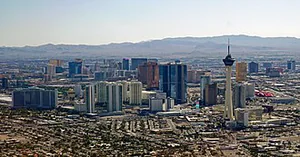
There’s nothing quite like the moment you crest that final rise on the highway and see it sprawled before you: a mirage of shimmering light, pyramid beacons, and a replica Eiffel Tower piercing the desert dusk. The Las Vegas Strip isn’t just a boulevard — it’s a four-mile-long fever dream of architecture, ambition, and pure spectacle. It’s a place where the line between reality and illusion blurs, where you can watch a volcano erupt, listen to the canals of Venice sing, and find yourself lost in a city that never quite admits it’s morning.
At its heart, the Strip is an adult playground engineered for wonder. Casinos pump oxygen into the air to keep you alert, themed hotels transport you from ancient Rome to modern New York in a 20-minute stroll, and the sheer electric hum of thousands of neon signs creates a skyline that looks like a circuit board brought to life. Every first-time visitor expects the glitz, but few anticipate the sheer scale. You don’t just walk the Strip; you hike it. It’s a marathon of excess, but one you’ll remember forever.
This iconic stretch of Las Vegas Boulevard South has become the world’s undisputed capital of entertainment, drawing nearly 40 million visitors each year. It’s a destination defined by reinvention — each decade demolishing its past to build something even bolder. But beneath the glittering facades lies a history as wild and tangled as a slot machine’s spinning reels, a story of gangsters, dreamers, and one very determined railroad.
The Strip’s story begins not with a casino, but with a dusty highway. In the 1930s, Las Vegas was a modest railroad town, but the legalization of gambling in 1931 and the construction of the Hoover Dam just 30 miles away brought a flood of workers and fortune-seekers. The true turning point came in 1941 with the opening of the El Rancho Vegas, a resort-casino built along the highway outside the city limits. The location, a few miles from downtown, seemed odd at the time, but it allowed the new resorts to sidestep city taxes and liquor laws. That odd choice would birth the Strip.
Then came a man named Benjamin “Bugsy” Siegel. In 1946, the notorious mobster poured his heart, soul, and borrowed money into the Flamingo Hotel, a lavish, pink palace that broke every rule of desert design. Though Siegel was gunned down in 1947, just months after its completion, the Flamingo changed everything. It proved that people would travel thousands of miles for the combination of sun, spectacle, and sin. By the 1950s, the Strip was booming — Sands, Sahara, and the Desert Inn attracted the Rat Pack, while Elvis Presley famously shook his hips on the stage of the New Frontier.
The mid-century era was one of low-slung, mid-century modern charm, but the next wave came with a distinctly new look. In 1966, developer Jay Sarno built Caesar’s Palace, turning the Strip into a themed-destination pioneer. Suddenly, you weren’t just gambling; you were a Roman emperor for the night. That idea exploded in the 1990s with mega-resorts like The Mirage (with its erupting volcano), the Luxor’s giant pyramid, and the Venetian’s canals. These grand, theatrical creations transformed the Strip from a gambling town into a global entertainment capital, drawing tourists even if they never touch a slot machine. Today, the Strip continues to evolve, adding massive spherical venues and luxury towers, but its roots remain deep in the desert soil of risk and reinvention.
So, you’re finally standing at the south end, ready to conquer the Strip. First, know this: the entire experience is free. Unlike most landmarks, you don’t need a ticket to walk the boulevard. The sidewalk is your gallery, and every hotel is a free museum. Start your adventure near the Welcome to Fabulous Las Vegas sign — that sweeping roadside icon is technically at the south tip, and it’s a mandatory photo stop. But don’t linger too long; the real show begins as you walk north. Inside each casino, you’ll find themed streets, indoor skies that cycle through artificial sunsets, and colossal aquariums teeming with exotic fish. The Mirage still erupts its volcano every hour (a fireworks-topped spectacle after dark), and the Bellagio’s fountains dance to music every quarter-hour — a spectacle so mesmerizing that you’ll forget you’re standing on a sidewalk.
For the best photo spots, you have options. The front of the Bellagio, with its lake reflecting the fountains and the surrounding towers, offers that quintessential postcard shot at golden hour. For a slightly more unique angle, climb the Eiffel Tower viewing deck at Paris Las Vegas — it’s a replica of the original, and from up there you’ll get a sweeping, unbroken view of the Strip’s entire neon canyon. In the Fountains of Bellagio’s shadow, you can also snap a shot of the palms and the mirrored facade of the hotel behind you, which looks surreal during sunset. Another lesser-known gem: the pedestrian bridge between the Bellagio and the Cosmopolitan is surprisingly empty in the late morning, giving you a clean, elevated shot of the crowds gathering below.
Now, hidden gems — the Strip is full of surprises you might miss. Walk through the Cosmopolitan’s Chelsea Tower lobby, and you’ll find the famous “secret” pizza, a tiny, no-frills outpost serving surprisingly excellent slices of New York-style pie. It’s hidden in a corner of the third-floor casino, and you’ll likely smell it before you see it. For a quiet reprieve from the chaos, step into the Wynn’s outdoor garden atrium, a lush, winding paradise of waterfalls and colorful flora that feels like a completely different planet from the clinking casino floors. And if you’re feeling adventurous, ride the Flamingo’s tram to the opposite end — the short trip offers a brief, free respite and a unique view of the Strip’s rear infrastructure, a behind-the-scenes look you’ll never get from the main drag.
How much time should you plan? Realistically, to properly see the Strip, you should budget at least a full day, and even then, you’ll only scratch the surface. To experience everything — the hotels, the free shows, the arcades, the rooftop bars — you’d want three days. The Strip really is a destination that asks you to slow down despite its frenetic energy. Most attractions within the hotels don’t require tickets; you can wander at your leisure. The paid experiences, like the High Roller observation wheel (a 30-minute, peaceful giant Ferris wheel ride) or shows like the Bellagio’s water-themed Cirque du Soleil performance, cost anywhere from $30 to $200. But the foundation of your journey — the walking, the people-watching, the sheer awe of being there — is absolutely free. So pack your comfortable shoes, embrace your curiosity, and let the neon current carry you. The Strip is a living, breathing, ever-changing masterpiece, and it’s waiting for you to write your own chapter in its glittering history.
