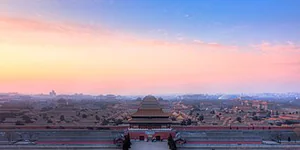
You know you’re somewhere extraordinary the moment you step under the Meridian Gate’s towering walls. The sheer scale of it hits you first—a sea of burnished gold roofs rolling toward the horizon, framed by vermilion walls that seem to pulse with centuries of history. The Forbidden City, or 故宫 as it’s called in Chinese, isn’t just a palace. It’s a frozen symphony of power, artistry, and ambition, built to awe and to intimidate. And it still does, even after six hundred years.
This is the largest palace complex on Earth, a square mile of courtyards, halls, and gardens in the heart of Beijing. For nearly five centuries, it was the seat of the Chinese universe, the private world of emperors and their courts. The name ‘Forbidden’ wasn’t hyperbole—ordinary mortals could not enter without imperial decree, and even the most powerful officials had to approach with heads bowed. Today, it’s open to anyone with a ticket, yet the mystique remains. You don’t just visit this place; you pass through a portal into China’s imperial past.
Its fame rests on more than scale, though. In every carved beam, every glazed tile, there’s a layer of meaning. The layout follows cosmic principles, with the emperor sitting at the center, the axis of the world. The great halls aren’t just buildings; they’re declarations of legitimacy, designed to make every visitor feel small. That feeling hasn’t faded. Walk through the Gate of Supreme Harmony and look up, and you’ll understand exactly what the Ming emperors intended.
The story begins in 1402, when Yongle, the third emperor of the Ming dynasty, seized power in a bloody civil war. He moved the capital from Nanjing to Beijing and set about building a palace fit for the Son of Heaven. The construction spanned fourteen years, from 1406 to 1420, using an estimated one million laborers. Timber came from the deep forests of the southwest, giant stones hauled across winter ice roads from quarries hundreds of miles away. The result was a masterpiece of traditional Chinese architecture, built on a grid of symmetry that still shapes your every step.
For over five hundred years, twenty-four emperors—fourteen Ming and ten Qing—lived and ruled within these walls. Court intrigue, lavish ceremonies, dynastic rise and fall: all of it unfolded here. But the walls weren’t impenetrable. In 1644, the Ming dynasty crumbled. Li Zicheng’s rebel army swept through, and the palace suffered fire and looting. Yet the Qing emperors, who swept in next, renovated and expanded it, keeping its grandeur alive. The last emperor Puyi was just six years old when he ascended to the Dragon Throne in 1908, and he remained in the palace until 1924, long after the empire had ended. Within a year, the Forbidden City became the Palace Museum, its treasures finally open to the public.
So, what should you see inside? Start with the central axis, where the grand halls rise like a procession of waves. The Hall of Supreme Harmony—the largest and tallest—stands on a three-tiered white marble terrace, its bronze sacrificial vessels casting long shadows. Here, the emperor received his highest officials on days of enormous ceremony. Don’t just look up at the throne; look down at the chiseled marble steps, the dragons and phoenixes that seem to writhe with energy. From here, the middle axis continues through the Hall of Central Harmony and the Hall of Preserving Harmony, each with its own character.
But if you stick only to the center, you’ll miss half the story. Wander east to the incredible galleries of the Palace Museum’s collection—bronzes, ceramics, jade, and imperial treasures that span millennia. The pottery alone is worth hours. Then head west, to the quieter courtyards of the Hall of Mental Cultivation, where Qing emperors actually governed. It’s more intimate, more human, a reminder that behind all the ceremony, real people lived and struggled here. The gardens, too, offer a breath of stillness. Gnarled cypresses, sculpted rockeries, and tiny pavilions create a private world that feels a million miles from the crowds.
How much time do you need? Honestly, a half-day only scratches the surface. For a real visit, plan on at least three to four hours; if you’re a history buff or a photography fanatic, give it a full day. It’s a lot of walking—there’s no way around that—so wear your most comfortable shoes and bring a refillable water bottle. Ticket prices shift with the season: typically around 40 yuan in November through March and 60 yuan in April through October, with children, seniors, and students eligible for discounts. You’ll need to book via the official Palace Museum reservation system, usually up to seven days in advance, and remember the palace is closed every Monday except for national holidays.
When it comes to photo spots, the obvious one isn’t wrong. The raised platform in front of the Hall of Supreme Harmony gives you the classic shot down the central axis, the crowds blurred at the edges. But for something more surprising, head to the Golden Stream, the narrow meandering canal just beyond the Meridian Gate. Its five stone bridges frame the first courtyard beautifully, particularly in the early morning when the light turns the water to gold. The famous corner towers—four elegant sentinels—are technically visible from outside, but you can catch glimpses of them from the moat walkways that ring the palace. If you want the postcard image of the whole complex, that’s from Jingshan Hill outside the north gate, but inside, look up at the intricate dougong brackets under the eaves; they’re a photographer’s dream.
Here’s a lesser-known gem: the Palace of Abstinence, tucked away east of the Hall of Heavenly Purity. It was where emperors fasted and purified themselves before major sacrificial ceremonies. Much smaller and more restrained than the grand halls, it feels serene and almost secretive. Another hidden feature? The carved marble ramp behind the Hall of Preserving Harmony. It’s an astonishing masterpiece of relief carving—nine dragons spiraling among clouds—yet most visitors breeze right past it. Take a moment to stop and trace its lines with your eyes. That’s the sort of detail the Forbidden City rewards. Always look one layer deeper.
The Forbidden City is a paradox. It’s one of the most visited museums in the world, yet it still holds secrets. It’s ancient, yet it’s alive—restoration crews work constantly, uncovering fresh paint and faded murals. Standing in its vast courtyards, you might feel like just another face in the crowd, but that’s the point. For millions of visitors across six centuries, the palace has done exactly what it was built for: filled them with wonder, and made them feel small. That’s a magic that doesn’t fade with time. It only deepens, glinting on every golden roof tile, waiting for you to come and find it.
