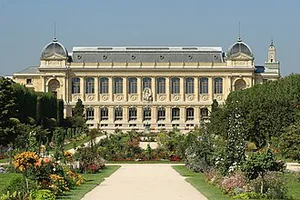
Tucked along the Seine, just a short walk from the roar of Place d’Italie, sits a marvel that most tourists rush past. The Jardin des Plantes isn’t just another pretty Parisian park. It’s a living museum, a scientific sanctuary, and a botanical fever dream spanning 28 hectares. Here, formal French geometry melts into alpine slopes, tropical humidity billows from glass palaces, and a 200-year-old ginkgo tree drops golden coins every autumn. You don’t just visit this place—you step inside a centuries-old attempt to collect and understand the entire natural world.
First-time visitors often stumble in expecting a quiet green space and instead find a wonderland. There’s a menagerie with pandas, a climate-controlled rainforest, and galleries stuffed with dinosaur bones and glowing jellyfish. The garden itself is a patchwork of moods: stiff parterres planted with healing herbs, a quiet rose garden, and a labyrinth crowned by a spiral staircase that offers the best free view of the Left Bank. It’s a place where science and poetry shake hands, and it leaves even the most scatterbrained traveler feeling grounded.
The garden’s roots run deep, all the way to 1626. That’s when Guy de La Brosse, a physician to King Louis XIII, convinced the crown to set aside a royal medicinal herb garden. The idea was simple: grow plants that could cure the sick. The site opened to the public in 1640, making it one of the oldest botanical gardens in the world. Back then, it was strictly about utility—physicians and apothecaries came to study and collect specimens. But over the next century, curiosity got the better of it.
The real transformation came in 1739 with Georges-Louis Leclerc, Comte de Buffon. As the keeper for half a century, Buffon turned the garden from a modest herb patch into a grand scientific powerhouse. He redesigned the grounds, added the elegant galleries that still line the park, and filled them with natural history collections. When the French Revolution swept through, the garden didn’t collapse—it soared. In 1793, the state reconfigured it into the Muséum national d’Histoire naturelle, and the garden became the beating heart of French natural science. Lamarck, Cuvier, and countless others taught here. The Jardin des Plantes predates the Eiffel Tower by 250 years, and it’s seen empires rise and crumble without missing a growing season.
So, what should you actually do when you arrive? Give yourself at least half a day. The garden is deceptively large, and you’ll want to wander without a rigid plan. Start in the formal French gardens near the main gates—those sweeping paths and symmetrical beds are a visual feast, especially in spring when tulips and cherry blossoms go wild. Then, let curiosity guide you to the Grandes Serres, the huge glasshouses that have stood since the 19th century. Inside, you’ll swelter through a Mexican desert, get drenched by a tropical monsoon, and marvel at chain ferns that survived the dinosaurs. You’ll need a ticket for these, but it’s a small price for walking through a living rainforest in the middle of Paris.
Don’t skip the Grande Galerie de l’Évolution, even if you’re not a science geek. The building itself is a cathedral of glass and iron, and its central hall is a stampede of stuffed zebras, elephants, and rhinos charging beneath a hanging blue whale skeleton. It’s theatrical, yes, but also deeply moving. Just across the garden, the Galerie de Paléontologie houses a terrifyingly beautiful wall of dinosaur bones, including a giant Diplodocus that’ll make your neck ache. For kids—and honest adults—the Ménagerie is a delightful surprise. It started in 1794 as one of the world’s first public zoos. It’s old-school, with a vintage menagerie charm, but the pandas, lemurs, and orangutans are still thriving.
Now for the hidden gems. Where are the best photo spots? You won’t find them on a tourist map. The Jardin des Plantes has its own little hill—the Labyrinth—planted in the 17th century and topped with a stone gazebo. Climb it for a sweeping, secret view of the garden, the Grandes Serres, and the dome of the Institut de France. It’s far less crowded than Montmartre, and the soft morning light makes for golden pictures. Another prize is the oldest tree in Paris, a Robinia pseudoacacia planted in 1601. It’s propped up by concrete crutches, but it’s still alive—a 400-year-old survivor that’s seen just about everything. And don’t miss the peony collection in late spring; its scent alone is worth the trip.
Here’s a secret the guidebooks keep to themselves: the garden is free to enter. You’ll only pay for the galleries, greenhouses, and menagerie, and even those are budget-friendly—around 6 to 10 euros depending on what you combine. Locals love to picnic on the wide lawns, and you should too. Grab a baguette, some cheese, and a bottle of wine, and find a bench by the iris garden. This is the Paris you came for: unhurried, green, and quietly brilliant.
Photography enthusiasts, your best frames are early morning, before the crowds show up. The long central alley that runs from the Place Valhubert to the Grandes Serres is a photographer’s paradise, especially when the light rakes across the flowerbeds. For a truly magical shot, position yourself in front of the Grande Galerie and shoot its stone facade reflected in the shallow mirror pool—a classic that never gets old.
The Jardin des Plantes is not a tourist trap. It’s a living, working institution—a lab coat and a sun hat at the same time. You can spend an hour or an entire day here, and you’ll still miss something. That’s the beauty of it. In a city obsessed with its past, this garden is the rare place that’s always looking forward, always trying something new, always growing. And it’s waiting for you, right there in the heart of Paris, to come and get lost.
