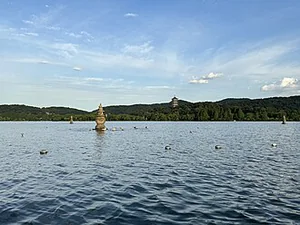
There’s a moment, just as you round the willow-lined causeway, when West Lake stops you cold. The water stretches out like a sheet of polished jade, framed by distant hills that fade into layers of blue-green mist. Pagodas peek through the trees, arched bridges curve like gentle smiles, and the whole scene feels less like a place and more like a painting that somehow learned to breathe. This is Hangzhou’s West Lake, or Xihu, a place that has inspired emperors, poets, and travelers for over a thousand years.
Ask locals why it’s so special, and they’ll often say it’s not just about the view—it’s about the feeling. The lake has a way of slowing you down, of pulling your shoulders away from your ears. Whether you’re strolling along the Su Causeway at sunrise, watching lotus blossoms sway in the summer breeze, or catching the soft glow of lanterns reflecting on the water at night, West Lake feels both grand and intimate at the same time. It’s no wonder UNESCO named it a World Heritage Site in 2011, calling it a masterpiece of Chinese landscape design. But really, that description only scratches the surface.
West Lake’s story begins long before the famous poets arrived. Over 2,000 years ago, this area was little more than a shallow lagoon connected to the Qiantang River. The transformation started during the Tang Dynasty, when local officials realized the lake could supply fresh water to the growing city of Hangzhou. But the real hero of the story is Su Shi, a celebrated poet and statesman of the Northern Song Dynasty. In 1089, he led a massive project to dredge the lake, using the mud and silt to build the long, elegant causeway that now bears his name. Locals still walk across Su Causeway today, six bridges in all, lined with peach and willow trees that burst into color every spring.
Centuries later, other officials and even emperors followed Su Shi’s lead. The Ming and Qing Dynasties saw further dredging, new causeways, and the creation of the lake’s iconic islands and pagodas. The slender Leifeng Pagoda, first built in 975 AD, was rebuilt in 2002 and now stands as a graceful sentinel on the southern shore. Meanwhile, the Three Pools Mirroring the Moon, a small island in the middle of the lake, was designed with three stone pagodas that cast perfect circles of moonlight on the water during Mid-Autumn Festival. For generations, West Lake was considered the cultural heart of China—a place where scholars came to compose verses, emperors built retreats, and lovers met under the weeping willows. It still holds that romantic, almost dreamlike reputation today.
So what should you actually do once you’re there? Start with a long walk along the Su Causeway, especially in the early morning. The crowds are thinner, the air is fresher, and the light turns the water into liquid gold. You’ll pass ancient bridges, pavilions, and benches where locals practice tai chi or play traditional stringed instruments. Give yourself at least two hours just for this walk alone. If you want the full classic West Lake experience, combine it with a leisurely boat ride. Small wooden boats with awning can carry you out to the islands, and the view of the lake from the water is completely different—softer, quieter, and much more personal. You can also hop on a larger sightseeing boat if you’re short on time, but the little boats are worth the extra cost.
When it comes to highlights, don’t miss the Leifeng Pagoda. Yes, it’s a reconstruction, but the elevator ride to the top rewards you with a sweeping panorama of the entire lake and the city skyline beyond. From there, you can walk down to the nearby Jingci Temple, which has stood on the southern shore for over 1,000 years. In the late afternoon, the sound of the temple bell drifting across the water is pure magic. Another must-see is the Broken Bridge, which isn’t broken at all. It’s famous for its winter scene, when snow piles up on one side of the bridge but melts on the other, making it look as though the bridge itself is cracked. Walk across it slowly, and you’ll understand why this spot appears in countless legends and films.
Photography lovers, take note: the best golden-hour shots happen around the Quyuan Garden, especially in July and August when the lotus blooms are at their peak. The reflections on the water, combined with the curved pavilions, create almost unfair compositions. Another lesser-known gem is the Guo Villa, tucked away on the western shore. It’s a traditional Chinese garden that feels refreshingly uncrowded, with rockeries, koi ponds, and shaded corridors that beg you to sit down and do absolutely nothing. Many visitors rush past it, which only makes it better.
How much time should you set aside? Honestly, you could spend a full day at West Lake and still leave with the feeling you missed something. If you’re on a tighter schedule, three to four hours will let you see the main sights, take a short boat ride, and snap the essential photos. But the lake really rewards slow travelers. Pack a picnic, find a bench under a pine tree, and watch the water change color as the afternoon fades. That’s the West Lake experience that no guidebook can fully describe.
Now, about tickets: the lake itself is free. You can wander along the shores, cross the bridges, and soak in the scenery without spending a yuan. That’s one of the best things about West Lake—it belongs to everyone. However, some specific sites charge entry fees. Leifeng Pagoda costs around 40 RMB, the Guo Villa is about 20 RMB, and the boat trips vary depending on the type of vessel and route. It’s always a good idea to carry some cash or have a mobile payment app ready, though major attractions usually accept cards and QR payments from international visitors. Still, the lake itself remains open, free, and endlessly generous.
One last tip for the curious traveler: after sunset, the lakeside promenade lights up in a way that feels almost theatrical. The pagodas glow warm against the dark water, and the distant hills become silhouettes. Street musicians sometimes gather near the pavilions, and the whole area takes on a relaxed, festive mood. It’s the perfect way to end your visit—a reminder that West Lake isn’t just a relic of China’s past. It’s a living, breathing part of Hangzhou’s everyday rhythm, waiting patiently for you to slow down and truly see it.
