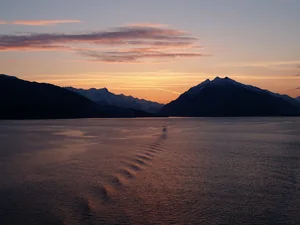
There’s a place in northern Montana where the Rocky Mountains tear through the sky, where valleys carved by ice hold lakes the color of turquoise ink, and where grizzly bears still roam free. That place is Glacier National Park, a crown jewel of the American wilderness. It’s not just a park; it’s a living cathedral of stone and water, a landscape so dramatic that it almost feels invented. One glance at the jagged peaks of the Lewis Range or the mirror-still waters of Saint Mary Lake, and you’ll understand why this corner of the world has captivated explorers, artists, and dreamers for over a century.
Glacier’s fame rests on more than just its postcard-perfect scenery. It’s one of the few places on Earth where you can stand in the middle of a continental divide, where rivers split — some flowing west to the Pacific, others east to the Atlantic and Hudson Bay. It’s also a sanctuary for some of North America’s most iconic wildlife: mountain goats, bighorn sheep, elk, and the elusive wolverine. Every year, millions of visitors come to drive the legendary Going-to-the-Road, hike the Highline Trail, or simply sit by a glacial lake and listen to the silence. The air smells of pine and alpine wildflowers. The wind carries the distant rumble of waterfalls. You feel small here — in the best possible way.
But here’s the thing: the park’s glaciers, its very namesakes, are melting. In 1850, there were around 150 glaciers. Today, fewer than 30 remain. Scientists predict they’ll be gone by 2030. That sobering reality makes a visit to Glacier National Park not just a vacation, but a pilgrimage to witness something precious and fleeting. You’re not just seeing a park; you’re saying goodbye to an ancient world of ice.
The history of this land stretches back far before it became a national park. Indigenous peoples — including the Blackfeet, Salish, Kootenai, and Pend d’Oreille — have called these mountains home for over 10,000 years. To the Blackfeet, the peaks were the “Backbone of the World,” a sacred place where vision quests were undertaken and where the spirit world felt close. They knew these trails, these passes, these hunting grounds intimately. Their presence is still deeply felt, both in place names like Going-to-the-Sun Mountain and in the ongoing cultural stewardship of the region.
The park’s modern history began with the railroads. In the late 19th century, the Great Northern Railway carved a path across the continent, and its visionary leader, Louis W. Hill, saw the stunning scenery as a way to lure tourists west. He called the area “America’s Switzerland” and poured money into advertising campaigns, built grand lodges like Many Glacier Hotel and Lake McDonald Lodge, and commissioned artists to paint the landscape. His efforts worked. In 1910, President William Howard Taft signed the bill creating Glacier National Park, the country’s 10th national park. Then came the engineering marvel — the Going-to-the-Sun Road, completed in 1932 after a decade of grueling work. It remains one of the most spectacular and challenging mountain roads ever built, and it changed everything, opening the park’s heart to ordinary travelers.
The history isn’t all triumphant. The railroad also brought miners and homesteaders, and their footprints remain in ghost towns and abandoned cabins. But the park’s true legacy is preservation. In 1932, it was joined with Waterton Lakes National Park in Canada to form the world’s first International Peace Park, a symbol of friendship between nations. In 1995, it was designated a World Heritage Site, recognized for its stunning geology, biodiversity, and its dramatic alpine ecosystems.
Now, for the practical stuff. What should you do when you actually get inside Glacier? Start with the crown jewel: the Going-to-the-Sun Road. This 50-mile engineering masterpiece crosses the Continental Divide at Logan Pass (elevation 6,646 feet). Drive it slowly — you’ll want to stop at every pullout. Don’t miss a hike at Hidden Lake Overlook, which starts right at Logan Pass. It’s an easy, boardwalk-lined trail that rewards you with views of a crystalline lake and, often, mountain goats and bighorn sheep right on the path. If you’re up for a challenge, tackle the Highline Trail. It clings to sheer cliffs for miles and offers some of the most jaw-dropping panoramic views you’ll ever lay eyes on. For a different vibe, head to Many Glacier Valley. It’s less crowded, and it’s the park’s unofficial “moose and bear central.” A hike around Swiftcurrent Lake or to Grinnell Lake is unforgettable.
How much time do you need? Realistically, a minimum of two full days just to scratch the surface. Three to four days lets you explore multiple valleys and take a boat tour on St. Mary Lake or Lake McDonald. Five days or more? You’ll leave wishing for a month. There are no timed entry tickets for the park itself, but a vehicle pass is required — $35 per vehicle for 7 days, and it covers everyone inside. You can buy it at the entrance stations. During peak season (July-August), the Going-to-the-Sun Road requires a vehicle reservation to get past Apgar, and these book out within minutes online. Plan ahead. Seriously.
For the best photos, wake up early. Sunrise at Wild Goose Island Overlook on Saint Mary Lake is pure magic — the peaks turn pink and gold. Another winner is the view from the top of Avalanche Lake, where granite cliffs surround you like a stone amphitheater. If you want something most tourists miss, hike to Cracker Lake. It’s a 6-mile round trip, but the water is an impossibly vivid, milky turquoise that doesn’t look real. Or find the tiny, hidden Swiftcurrent Falls viewing area — it’s a serene spot many drive right past. And don’t forget Apgar Village: at sunset, the reflections on Lake McDonald are like a painter’s dream, with colorful pebbles glittering beneath the surface.
One last bit of advice: don’t underestimate this wild place. Glacier is remote, rugged, and unpredictable. Weather can change from sunny to snowy in an hour. Bring layers, bear spray (you’ll see it for sale everywhere), and a hearty appetite for adventure. The park’s shuttle system is a great way to avoid parking hassles, especially at Logan Pass. But beyond all the logistics, the most important thing is to slow down. Sit on a rocky shoreline. Watch an eagle soar. Breathe in the thin, crisp air. Glacier National Park has been called the “Crown of the Continent” for a reason — it’s the brightest treasure of the American West, and it’s waiting for you.
This isn’t just a place you visit. It’s a place that visits you back. You’ll carry its jagged peaks and turquoise waters in your memory long after you’ve returned home. And honestly, that’s the whole point.
