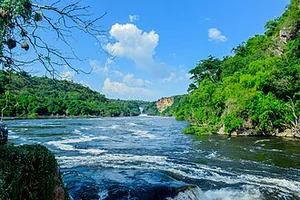
The Nile River isn’t just a waterway; it’s the reason Egypt exists. As you stand on its banks, the wide, slow-moving water shimmers between golden desert hills and lush green fields in a way that feels almost surreal. The river stretches north for more than 4,000 miles, though the Egypt you’re standing in is defined by just a narrow ribbon of it—green, fertile, and teeming with life. There’s a timelessness to the scene. Feluccas drift silently across the surface, their white sails casting soft reflections, while on the shore, a water buffalo cools off beside a mango grove. You can see why ancient Greeks called it the gift of the Nile.
For first-time visitors, that phrase may feel like a cliché, until you watch the sun rise over the river. The light turns the water to liquid gold and the desert to shades of amber and rose. This is the Nile at its most magical—a place where history, nature, and daily life intersect in a way you won’t forget. Whether you’re on a river cruise between Luxor and Aswan, riding a bumpy felucca, or simply sipping mint tea at a riverside café in Cairo, the Nile pulls you in. It’s not just a sight; it’s the heartbeat of this country.
The river’s fame isn’t merely about mystique, either. It’s a force that has sustained civilization for five millennia. Every year, the ancient floods turned the desert into a green oasis, and people built their temples, cities, and tombs along its banks in gratitude and awe. The Nile is quite simply one of the world’s most famous attractions—not because of a single monument, but because the entire story of Egypt unfolds on its shores.
The history of the Nile is, in many ways, the history of Egypt itself. Around 5000 BCE, early farming villages began to appear along the river’s fertile floodplains. By 3100 BCE, these communities had coalesced into the first of Egypt’s dynasties. The river was everything: transportation, irrigation, food, and even religion. The ancient Egyptians personified the Nile as Hapi, a god of fertility and abundance, and they sang hymns of praise to the annual inundation. Without that predictable flood, there would have been no wheat, no pharaohs, no pyramids, no Egypt as we know it.
As centuries passed, the Nile’s importance never waned. The pharaohs built their grand monuments along its banks—Luxor’s Karnak Temple, the Colossi of Memnon, the mortuary temples of Thebes—all aligned with the river’s flow. The Greeks and Romans used it as a busy commercial highway, then Cairo rose beside it as a crossroads of Islamic civilization in the 10th century. In modern times, the construction of the Aswan High Dam in 1970 stopped the annual floods forever, turning a so-called curse into a blessing of stored water and hydroelectric power. Yet the change came with a price: some Nubian villages were relocated, and the famous temples of Abu Simbel were painstakingly moved piece by piece to higher ground. The Nile’s story is one of constant transformation, but its role as the soul of Egypt remains untouched.
So what should you actually do when you visit? Start with a boat ride, because seeing the Nile from the water is a completely different experience. In Aswan, you can hop aboard a traditional felucca for an hour-long sail. The skipper will likely let you take the ropes and steer, and you’ll glide past granite boulders and the mausoleum of the Aga Khan. The quiet is almost eerie, broken only by the lapping water and the creak of the wooden mast. If you have more time, a multi-day cruise between Aswan and Luxor is the classic way to soak in the river’s rhythm. That’s not a flight or a hotel—it’s just the journey, with sunsets over the western bank and the constant thrill of seeing ancient temples rise from the shore.
For a shorter visit, head to the riverside corniche in Cairo or Luxor and simply wander. In Cairo, the Nile isn’t the green, rural river of the south—it’s wide, blue-gray, and framed by high-rises and bridges. Watch the locals fishing from the embankment, or take a public water taxi across to the island of Zamalek. It’s not glamorous, but it’s authentic. In Luxor, you’ll find the famous Winter Palace that hugs the shoreline, and across the river, the Valley of the Kings rises on the western horizon. The west bank is where the ancient Egyptians built their tombs, and the ferry ride over is a budget-friendly mini-adventure in itself.
How much time do you need? That’s flexible. If you’re just doing a one-hour felucca ride in Aswan, that’s enough to get the feel. It’ll cost you around 100–200 Egyptian pounds, but you should agree on the price before you board. If you want to visit riverside temples like Karnak or Philae, they each require at least two hours, and they have separate entry tickets—usually around 200–300 pounds per site. The Nile itself is free, of course. Sunrise and sunset are the absolute best times for photos. The soft light makes the water look like polished amber, and the silhouettes of feluccas against the glowing sky are pure poetry. On the east bank of Luxor, climb to the top of the Souk entrance near the Luxor Temple for a wide angle that catches both the river and the temple columns. In Aswan, the terrace near the Old Cataract Hotel offers a gorgeous view of the river and Elephantine Island.
Now for hidden gems. Most travelers rush past the Nilometer on Roda Island in Cairo, but this ancient structure was used to measure the river’s flood levels for thousands of years. It’s a peaceful, semi-hidden site—just a few steps from the bustle of the city, yet utterly forgotten. In Aswan, don’t skip the Nubian villages on the west bank. You can take a brief motorboat ride over, wander the colorful alleyways, and chat with locals who still practice the same river traditions as their ancestors. Also, consider Kitchener’s Island, a botanical garden that feels like a secret jungle sitting right in the middle of the Nile. And if you’re traveling during the winter months, visit the Temple of Kom Ombo at dusk. It’s less crowded than other sites, and the crocodile mummies in its small museum are a fascinating reminder that this river was once home to hungry reptiles.
The Nile is not a monument you visit and forget. It’s a living, changing entity that connects you to every Egyptian who has ever farmed, sailed, or dreamed along its banks. Whether you spend an hour or a week on the water, you’ll leave with the feeling that you’ve experienced the true pulse of Egypt. So take your time, take in the light, and let the river set your pace.
