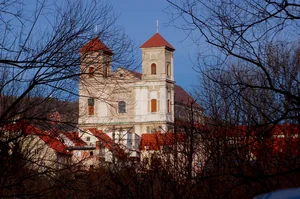
You step through the palace gates, and the Mediterranean sun gives way to cool shadows. The Bardo National Museum isn’t just a building filled with artifacts—it’s a time machine disguised as a palace. Housed in a 15th-century Hafsid palace, this Tunisian treasure sits on the edge of the capital, its ornate rooms and mosaic-covered walls telling stories that span two thousand years. For anyone fascinated by ancient civilizations, this is the place where history breathes.
The Bardo is world-famous for one thing above all: its Roman mosaics. It holds the largest and finest collection on the planet. But that’s not all. You’ll find Punic and Christian treasures, Islamic art, and marble statues that feel almost alive. The museum is a mosaic of cultures, much like the country itself. Tunisia has been a crossroads of empires, and the Bardo captures that dazzling mix under one roof.
The palace itself is a character in the story. Built in the 13th century as a residence for the Hafsid sultans, it later became the seat of the Ottoman beys. In 1882, the French colonial authorities turned part of the harem into a museum dedicated to antiquities. What began as a modest collection of ancient artifacts grew into one of North Africa’s most significant cultural institutions. The building was expanded over the decades, with grand rooms and corridors added around the original courtyards. For centuries, it was also the place where the beys of Tunis signed treaties—most notably, the one that established the French protectorate in 1881.
But the Bardo’s story doesn’t end with colonialism. After Tunisia gained independence in 1956, the museum became a symbol of national pride. It was renamed the Bardo National Museum in 1958 and underwent major renovations. A hijacked attempt to turn it into a fortress in 2015, when terrorists attacked, shook the world. Yet the museum reopened, stronger and more resilient, with new security measures and an unwavering commitment to preserving Tunisia’s heritage. Today, it stands not just as a collection of objects, but as a testament to survival.
Step inside, and the first thing that hits you is the sheer scale of the mosaic floor beneath your feet. The so-called “Scenes of Daily Life” mosaics are mind-blowing—farmers, fishermen, gladiators, and gods rendered in thousands of tiny colored stones. You’ll want to start in the Roman rooms, where the mosaics are arranged chronologically. The famous “Virgil” mosaic, showing the poet surrounded by muses, is a must-see. Equally spectacular is the “Orpheus Taming the Beasts” mosaic, where music flows from his lyre, mesmerizing lions, birds, and trees.
Don’t rush. Give yourself at least two to three hours. The museum covers three floors, and each room rewards patience. The lower floor holds the Punic and early Islamic collections—jewelry, pottery, and bronze objects that whisper of ancient Carthage. The upper floors boast the most dazzling mosaics and the marble statuary from the Roman towns of Utica, Sousse, and Dougga. If you’re passionate about history, you might easily spend half a day. There’s no need to book a guide; the information panels in French and Arabic are thorough, though English labels are becoming more common. You can hire an official guide at the entrance if you want deeper stories—it’s worth the extra dinars.
Ticket prices are modest—around 12 Tunisian dinars for foreigners, with a small additional fee for photography. The museum is closed on Mondays and is generally quietest right after opening, so aim to arrive early. You’ll have the mosaics almost to yourself before the tour buses show up. And a word to the wise: the halls can get warm in summer, so bring water and a light scarf for the more air-conditioned rooms.
For the best photo spots, head straight to the central courtyard. The horseshoe arches and zellige tilework are stunning in morning light. Inside, the “Triumph of Neptune” mosaic room is a photographer’s dream—the massive floor piece stretches across the entire space, and if you kneel at one end, you can capture the whole scene. Another hidden gem is the small room dedicated to the synagogue of Naro. It holds a second-century inscription, one of the earliest Jewish settlements in North Africa. Most visitors walk straight past it.
Don’t miss the little-known details, either. Look for the mosaic of a sine-playing dancer, her gaze catching yours from across the room. Seek out the tiny dolphin motifs woven into the borders of larger panels—an ancient artist’s signature. And if you climb to the second floor, you’ll find a quiet terrace that overlooks the city. From there, you can see the modern suburbs blend with the old medina, a reminder that Tunisia is a country of layers.
The Bardo isn’t just a museum; it’s an emotional experience. Standing over a mosaic that survived earthquakes, empires, and revolutions makes you feel small. Then you remember the people who made it—their hands, their tools, their stories. That connection is what you’ll carry home. Whether you’re a devoted history buff or just passing through Tunis, give the Bardo the time it deserves. It will give you back more than you bargained for.
