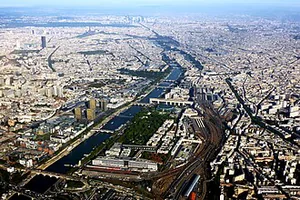
There’s a blue ribbon that curls through Paris, and once you’ve seen it in person, you’ll never forget it. The Seine isn’t just a river—it’s a stage where the city’s most famous landmarks pop up like scenes from a film. Cast a glance from any bridge, and you might see the Eiffel Tower shimmering in the distance, the towers of Notre-Dame looming above the trees, or a couple kissing on a stone quay as a tourist boat hums by. The light dances on the water at all hours, turning the river from silver to rose to deep gold, and you’ll likely find yourself simply leaning over a railing, watching the world drift past.
It’s no wonder the Seine has captured the hearts of painters, poets, and travelers for centuries. The river’s banks are so packed with architectural wonders—the Louvre, the Musée d’Orsay, the Grand Palais—that the whole stretch was declared a UNESCO World Heritage site in 1991. But the Seine isn’t a museum piece. It’s a living, breathing part of the city, where Parisians jog, picnic, read, and flirt. To experience it is to understand why Paris is often called the City of Light.
The story of the Seine begins long before Paris existed. The river owes its name to Sequana, a Celtic fertility goddess, and the ancient Parisii tribe settled on its banks around 250 BC. For them, the river was a lifeline for trade and transport. The Romans later built the city of Lutetia around it, and by the Middle Ages, the Seine had become a bustling commercial highway. Notre-Dame was raised on the Île de la Cité, an island in the middle of the river, and medieval merchants loaded wine, wood, and wheat onto riverboats that crowded the narrow waterway.
The river’s role in shaping Paris can’t be overstated. During the 19th century, Baron Haussmann’s massive redesign of the city turned the muddy banks into elegant stone quays and wide riverside boulevards. The Impressionists, including Monet and Renoir, set up their easels along the Seine to capture its ever-shifting light, effectively making the river a character in their canvases. In more recent history, the 2024 Paris Olympics opened with a daring boat parade down the Seine, proving that this ancient waterway is still very much the heart of the city.
The best way to explore the Seine is by getting onto it. A boat cruise gives you an effortless, moving panorama of Paris’s greatest hits. Several operators, including Bateaux Parisiens and Bateaux Mouches, offer one-hour sightseeing loops along the river. Expect to pay around €15–€20 for a standard cruise, though you can also purchase hop-on, hop-off passes with the Batobus system if you prefer to combine boating with exploring the banks. You don’t need to book days ahead, but in a hot summer, you’ll be glad you reserved a spot for an evening ride, when the city lights begin to twinkle.
Of course, the river is also free to enjoy from its banks. A walk along the Left Bank—particularly between the Pont de l’Alma and the Pont Neuf—feels like strolling through an open-air gallery. Start near the Eiffel Tower and follow the tree-lined quays east. You’ll pass the Musée d’Orsay’s clock-faced façade, then duck under the Pont Royal and find yourself gazing at the Louvre’s glass pyramid. Give yourself at least half a day if you want to wander, sit on a bench, and soak in the atmosphere. But for a truly unhurried experience, a full day lets you crisscross the bridges, visit the island citadels, and return at sunset.
When it comes to photo spots, the most obvious winners are the bridges. Pont Alexandre III, with its opulent gilded statues and art nouveau lamps, frames the Eiffel Tower beautifully, especially an hour before sunset. For a more offbeat shot, head to Pont de Bir-Hakeim—a double-decked bridge used in many films—and position yourself so the tower peeks through its iron arches. Another gem is the Square du Vert-Galant, the tiny triangular park at the western tip of the Île de la Cité. It’s quiet, leafy, and gives you a perfect view of the Louvre, the river, and the pointy Pont Neuf all at once.
Hidden surprises lurk everywhere along the Seine. Keep an eye out for the bouquinistes, those dark green metal boxes on the quays that have been selling rare books, vintage posters, and old postcards since the 1500s. They’re so iconic that UNESCO recognized them as a cultural heritage of humanity. A little farther south, on the Île aux Cygnes, you’ll find a miniature Statue of Liberty, a gift from Paris to her American cousin that most crowds miss entirely. And during the summer, the riverbanks transform into Paris Plages—a temporary beach with lounge chairs, palm trees in pots, and sprinklers for kids. It’s a delightful, slightly absurd Parisian tradition.
A few practical notes to make your visit smooth. Wear comfortable shoes, because you’ll walk more than you expect. Keep valuables close, especially around tourist hotspots and on crowded boats. And check the river’s water levels if you’re visiting in winter—the Seine occasionally floods over its banks, closing some walkways. But even then, it’s a spectacle of its own. The river is never the same twice, and that’s the gorgeous trick of it. You don’t have to see everything; you just have to be there. Stroll, pause, snap a photo, then let the water and the light pull you along. That’s the real Seine experience—the one you’ll remember forever.
