Imagine water so clear it feels like you’re floating in liquid glass, and granite boulders the size of houses tumbling into a sea that shifts from sapphire to emerald with every passing cloud. That’s the Similan Islands for you—a cluster of nine pristine islets in the Andaman Sea, roughly seventy kilometers off Thailand’s western coast. For divers, they’re a holy grail. For beach lovers, they’re a daydream made real. And for anyone lucky enough to set foot on their powdery white sands, the Similan Islands are nothing short of a tropical revelation.
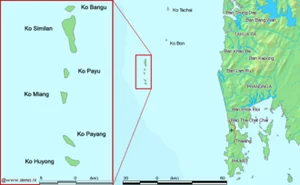
The name ‘Similan’ comes from the Malay word ‘sembilan’, meaning ‘nine’—and indeed, the archipelago consists of nine islands, numbered simply from Ko Huyong (Island 1) up to Ko Similan (Island 8) and Ko Payu (Island 9). The entire group forms a marine national park, protected since 1982, and the silence here is broken only by the rustle of casuarina pines and the distant crash of waves on coral. You won’t find souvenir shops or beach bars. What you will find is nature in its rawest, most stunning form: underwater pinnacles, coral gardens, and the famous ‘Sail Rock’ that juts out of the sea like a prehistoric beast.
What makes the Similans truly unforgettable, though, is the light. As the sun moves across the sky, the water changes colour in ways that seem almost impossible—from pale aquamarine to deep navy to a shimmering silver that stuns your eyes. It’s no wonder that this archipelago is consistently ranked among the top dive destinations on Earth. But even if you never strap on a tank, the islands offer something profound: a chance to disconnect, to wade through warm shallows, to feel utterly small beneath a vast tropical sky.
The history of the Similan Islands is far quieter than you’d expect for such a celebrated spot. For centuries, the islands were known only to sea gypsies—the Moken people—who navigated these waters in wooden boats, harvesting shellfish and building seasonal camps on the beaches. They called the islands ‘Pulau Sembilan’ and treated them as sacred, leaving no permanent structures behind. Their nomadic lifestyle meant that the islands remained virtually untouched by the outside world well into the twentieth century, with only the occasional pirate or fisherman braving the treacherous reefs.
It wasn’t until the 1960s that the Thai government began to take serious notice. In 1965, a Royal Thai Navy survey team mapped the islands, and just over a decade later, in 1982, the Similan Islands were declared a national park—the 43rd in Thailand. The move was a turning point. Overnight, the islands gained official protection, but it also opened the door to tourism. Early visitors arrived on fishing boats, camping on the sand with little more than a tent and a dream. By the 1990s, liveaboard dive boats were already making regular trips, and the reputation of places like Richelieu Rock and Elephant Head Rock began to spread through the global diving community.
More recently, the park has faced the challenge of balancing popularity with preservation. In 2018, authorities closed the islands temporarily to rehabilitate damaged coral reefs, and visitor caps were introduced. That spirit of conservation is woven into the islands’ history—they’ve never been developed with hotels or paved roads. Instead, the park headquarters on Ko Similan remains a simple ranger station, and overnight stays are strictly limited. The history, then, is not one of kings and builders, but of a fragile ecosystem that has somehow managed to survive the modern era with its wild soul intact.
So what exactly should you do when you arrive? Start with the obvious: the snorkeling. You don’t need to be a certified diver to be blown away. Put on a mask and fins at Ko Miang (Island 4) or Ko Payu (Island 7), and within seconds you’re surrounded by butterflyfish, parrotfish, and if you’re lucky, a sea turtle gliding past like a slow-motion ghost. The coral here is healthy and dense, forming underwater gardens that seem to pulse with colour. For certified divers, the real magic lies further out—ancient rock formations, leopard sharks resting on sandy bottoms, and swirling schools of barracuda at a site called East of Eden. But even a simple mask and snorkel are enough to make you feel like you’ve stumbled into a nature documentary.
Give yourself at least a full day for this place. Trust me, you’ll want the time. A half-day trip feels like a teaser trailer—you barely get your feet wet before it’s time to leave. Ideally, spend two nights on the islands themselves, booking a simple bungalow or a tent on Ko Similan or Ko Miang. The experience of waking up on a beach where the only footprints are yours, then watching the sunset paint the granite boulders orange, is worth every bit of planning. Day-trippers arrive around nine in the morning and depart by four; you’ll have the islands nearly to yourself in the late afternoon and early evening.
As for tickets, the park entrance fee is separate from your boat transfer. Foreign adults pay about 500 baht (roughly 14 USD), and children half that. If you’re staying overnight, there’s a second-day fee as well, still modest. Keep in mind that the islands are open only from mid-October to mid-May—the rest of the year the monsoon makes the sea too rough, and the park closes completely. Bring cash, because there are no ATMs on the islands, and buy your entry in advance during peak months (December to February), when the ranger station gets a steady stream of visitors.
Photography enthusiasts, this is your paradise. The single most iconic shot is from the viewpoint on Ko Similan (Island 8) called ‘Hin Pousar’, where a steep, rocky trail climbs to a broad granite dome. From the top, you get a 360-degree panorama of the entire island chain, with turquoise water curling around white sandbars and sailboats bobbing below. Sunrise here is pure magic, but even midday, the view is breathtaking. Another lesser-known treasure: the ‘Heart Rock’ on Ko Miang, a large boulder shaped strangely like a heart, tucked behind the beach on the eastern side. Most visitors walk straight past it, so you’ll likely have it all to yourself.
Don’t miss the bat cave on Ko Miang either—a shallow limestone cavern near the ranger station where, at dusk, thousands of small bats swirl out in search of insects. It’s unexpected and a little eerie, but it’s the kind of hidden gem that makes you feel like an explorer. And after a day of swimming and hiking, the best thing in the world is simply to sit on the sand at Ko Payu’s secluded bay and let the waves do the talking. The Similan Islands aren’t a place you check off a list; they’re a place that rewires something inside you—a reminder that wild, impossibly beautiful corners of the earth still exist, waiting for you to dive in.
