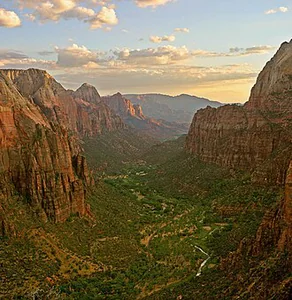
There are places that photographs simply can’t prepare you for, and Zion National Park is one of them. One moment you’re driving through high desert scrub, and the next, you’re dwarfed by walls of Navajo sandstone that blaze orange, cream, and deep rusty red against a shockingly blue sky. The Virgin River, the park’s quiet engine, has carved this landscape over millennia, and standing on the canyon floor, you can hear its constant, patient hum. It’s a place that feels almost sacred—and that’s exactly why it got its name.
Zion is often described as Utah’s crown jewel, and while nearby parks like Bryce and Arches have their own otherworldly appeal, nothing quite matches the sheer verticality of Zion. The cliffs here don’t just loom; they lean inward, creating natural amphitheaters and shifting light shows with every passing hour. Whether you’re craning your neck at the base of Angels Landing or wading through the cool, caramel-colored waters of The Narrows, you’ll feel a genuine sense of wonder. This isn’t just a park you visit. It’s a park that stays with you.
Hundreds of years before tourists arrived, this canyon was home to the Ancestral Puebloans, who farmed along the riverbanks and left behind granaries hidden in cliff alcoves. Later, the Southern Paiute tribes lived here, and their descendants still retain deep cultural ties to the land. The first European Americans came in the late 1850s, but it wasn’t until 1909 that President William Howard Taft designated the area as Mukuntuweap National Monument. A decade later, Congress renamed it Zion National Park—a name inspired by the Mormon pioneers who saw the towering red cliffs as a literal promised land. Reading that history, you understand why they felt so moved. The place does something to your spirit.
Building the infrastructure to open Zion to the world was no small feat. The Zion-Mt. Carmel Highway, completed in 1930, remains a marvel of engineering. Snaking through sheer cliffs and bored through solid rock, it turned this remote canyon into an accessible wonder. That road’s famous switchbacks and the 1.1-mile tunnel still leave first-time drivers gripping the wheel a little tighter. But it’s precisely that blend of raw nature and human ambition that makes the park so compelling. You’re both a spectator and a participant in a story that’s been unfolding for eons.
So, what should you actually do here? Start with the Scenic Drive, which the park runs via clean, frequent shuttle buses from spring through fall. You’ll ride along the canyon floor, past sheer cliff walls, and you’ll feel the temperature drop as you go deeper. Most folks head straight for Angels Landing, a hair-raising hike up a narrow ridge with chains bolted into the rock. It’s thrilling, but it’s also a bit of a bucket-list pilgrimage—and it now requires a permit through a lottery system. If you’re not up for that, don’t worry. The Narrows is just as iconic. You’ll hike right in the Virgin River, between walls hundreds of feet tall, and there’s nothing quite like the cold water swirling around your knees while you gaze up at a sliver of sky.
For a gentler option, the Emerald Pools trail delivers lush scenery and a stunning waterfall, especially after rain. And if you’ve got a few extra hours, Canyon Overlook Trail offers one of the easiest, most jaw-dropping viewpoints you’ll find anywhere. A word to the wise: the shuttle is free, but the park entrance fee ($35 per car) is required. If you plan on hiking Angels Landing, apply for the permit online at least a few months ahead. For everything else, just walk in and soak it up. A full day can cover the essentials, but two full days feels right, especially if you want to catch sunrise and sunset in different corners of the canyon.
Now, about photo spots. The classic postcard shot is from Canyon Junction Bridge, where the river mirrors the Watchman peak at dusk—that’s your golden-hour jackpot. But don’t overlook the views from the Court of the Patriarchs viewpoint or the east side’s Checkerboard Mesa, whose distinctive cross-hatched patterns look almost painted on. And if you really want to escape the crowds, walk a little past the Temple of Sinawava viewpoint. Most visitors turn around there, but a few hundred yards further up the trail, the canyon walls close in and the magic of The Narrows begins. You’ll have it nearly to yourself.
Hidden gems? Absolutely. The park’s quieter Kolob Canyons section, located in the northwest corner, offers a dramatic canyon drive and a moderate hike to Kolob Arch—one of the largest freestanding arches on Earth. There’s also the Pa’rus Trail, which runs along the river near the visitor center and is stroller-friendly, making it perfect for families. And if you’re a true adventure seeker, consider applying for a permit to hike The Subway, a winding, walled-in channel of swirling rock and pools that looks like something from another planet. It’s a full-day effort, sometimes requiring ropes and plenty of route-finding, but it’s the kind of experience you’ll talk about for decades.
Zion rewards the prepared. In summer, temperatures routinely top 100°F, and flash floods are a real danger in slot canyons, so check the forecast and pack way more water than you think you need. Winter, though, is a well-kept secret. The crowds thin out, the light turns low and golden, and the red rock takes on a softer, almost melancholic glow. No matter when you visit, the canyon will meet you on its own terms. You just have to step inside.
At its core, Zion isn’t about logos, ticket counters, or even the shuttle system. It’s about the feeling of standing at the bottom of a cathedral carved by time and water. You’ll leave with dusty boots, a sore neck, and a quiet sense that you’ve touched something bigger than yourself. For over a century, that’s what has drawn people here—and what will keep pulling them back for generations to come.
