Suzhou is a city that seems to have been arranged by a calligrapher. Canals sliding under stone bridges, silk shops smelling of jasmine, and, scattered through the old neighborhoods, some of the most famous classical gardens in the world. At the center of it all sits the Humble Administrator’s Garden — Zhuozhengyuan in Chinese. It’s not the smartest name on a map, but once you step through its gates, you understand why it’s the name that matters.
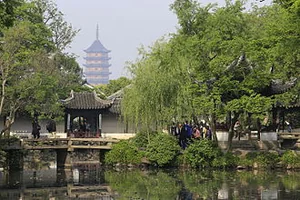
The garden begins with water. About half the space is covered by ponds, and every pavilion, rockery, and corridor leans toward them like they’re waiting for a secret to be told. The lotus leaves fill the ponds in summer, and the sky is copied in the surface. It feels like walking inside a scroll painting that’s somehow come to life. The famous Chinese gardening art of “borrowed scenery” is at work here: a pagoda from outside the garden appears beyond the treetops, as if the whole world beyond were invited into the composition.
This is not a place to rush. It’s a place to pause, look through a circular window frame, and watch the light change on a rock that seems to have been carved by a mountain god. For travelers who have seen the Forbidden City and the Great Wall, this garden is something else — not grand, not imperial, but personal and deeply poetic. It’s no surprise that UNESCO listed it as a World Heritage site in 1997.
The garden was built in 1509, during the Ming dynasty, by a man named Wang Xianchen. Wang was a government official and poet who had had enough of court politics. He retreated to Suzhou, bought an abandoned temple grounds, and with the help of friends and monks, created a garden that would outlive every empire name on his career. He named it after a line from a Jin dynasty poet, Pan Yue, who wrote about the quiet life of an “humble administrator” — someone content with growing vegetables, sharing tea, and watching rain fall on lotus leaves.
The garden didn’t stay peaceful for long. Wang’s son lost the property in a gambling wager, and over the following centuries, the garden was split, sold, bricked over, and used for everything from a government office to a war base. During the Taiping Rebellion era, parts were badly damaged. Yet somehow, the bones of the garden survived. In the 1950s, serious restoration work began, and the three sections you can walk today — the eastern, central, and western gardens — were pieced back together. In 1997, UNESCO recognized the garden’s importance as part of the Classical Gardens of Suzhou. And now, it’s as close to Ming dynasty poetry as you can walk around in.
You’re asking yourself, “Where do I begin?” Start with the central garden. This is the heart. The Hall of Distant Fragrance, with its wide, open porch, is the best first stop. Stand there, look across the Grand Lotus Pond, and you’ll see the whole composition: rockeries on one side, a small pagoda beyond the wall, an arched bridge that looks like it’s been there since the beginning of time. The halls are full of carved lattice windows, each one a different pattern, and the shadows they throw on the floor are almost as beautiful as anything growing outside.
From there, wander east. The eastern section is more open, more pastoral, with fewer structures and a slower pace. Then cross to the west, where the garden becomes intimate and playful. The Mandarin Duck Pavilion, with its two-roofed, two-sided design, is one of the most beloved spots — it was made for banquets, with blue glass windows glowing in the afternoon light. Every turn in this garden is deliberate. You’ll find yourself circling ponds, crossing half-hidden bridges, and suddenly noticing a pomegranate tree or a stone table that seems to be waiting for someone.
How much time should you give it? At least two hours, maybe three. The garden rewards the lingerer. If you go in the morning, you’ll beat the crowds and get that quiet pond moment. If you go in light rain, even better — the rooftops get a dark, silken shine, and the place seems even more private. Ticket prices hover around seventy to ninety yuan depending on the season, which is roughly ten to thirteen dollars. For a place that has been perfecting its mood for over five hundred years, that’s something of a bargain.
Now, the photos. You’re going to want to turn every frame into a postcard. The classic shot is from the Hall of Distant Fragrance across the lotus pond, with the North Temple Pagoda peeking over the trees in the distance. That view is the whole game of classical garden design in one image. Another great spot is the Small Flying Rainbow, a low, zigzag covered bridge that seems to float just above the water. On a windless day, the reflections double the beauty. And don’t forget the round doorways — stand in one, lean against the frame, and let the garden become your portrait.
But if you want the real hidden gems, look for the small things. There’s a little courtyard behind the western buildings where a single plantain tree grows by a wall — the leaves are huge, and in Chinese garden design, they’re there specifically to catch the sound of rain. It’s a tiny, almost secret corner. There’s also a “borrowed scenery” trick that visitors often miss: from a certain window in the western section, the outside pagoda looks like it belongs to the garden. Find that frame, and you’ll see exactly what the Ming dynasty designers were thinking. Take a moment, breathe, and listen to the water — the Humble Administrator may have called the garden “humble,” but there’s nothing modest about the way it changes the people who walk through it.
