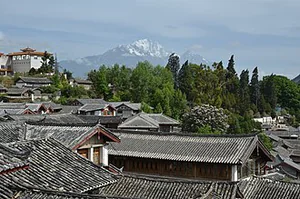
In the shadow of the snow-capped Jade Dragon Snow Mountain, there’s a place where water sings through ancient stone canals and cobbled lanes wind like forgotten secrets. Lijiang Old Town, a UNESCO World Heritage site in China’s Yunnan province, isn’t just another historic quarter. It’s a living, breathing maze of Naxi culture, wooden houses with upturned eaves, and a rhythm of life that has barely changed for centuries. You’ll hear the gentle clatter of horse hooves on stone, the low hum of vendors selling handmade silver, and the ever-present murmur of rushing water—a constant companion that seems to guide you deeper into its embrace.
What makes Lijiang so extraordinary isn’t just its beauty, though that’s undeniable. It’s the feeling that you’ve stepped into a world that exists slightly off the clock. Unlike the polished, reconstructed old towns you might find elsewhere in China, Lijiang retains a raw, authentic pulse. Locals still live here, hanging laundry from wooden balconies, smoking pipes in doorways, and playing ancient instruments in shaded courtyards. For international travelers, it’s a rare glimpse into the intersection of Han, Tibetan, and Bai influences, all filtered through the unique lens of the Naxi people who call this place home. You don’t just visit Lijiang; you surrender to its unhurried spell.
But don’t let the postcard-perfect images fool you. Lijiang Old Town is a place of layers. On the surface, it’s a paradise of souvenir shops, tea houses, and lively bars. Dig a little deeper, and you’ll discover a sophisticated water-management system that has functioned flawlessly for over 800 years, a complex network of bridges and lanes designed to confuse evil spirits, and a cultural legacy that nearly vanished during the 20th century’s upheavals. This is a town that demands you pay attention—to its hidden corners, its quiet courtyards, and the stories embedded in every weathered timber.
Lijiang’s story begins in the late Song dynasty, around the 12th century, when the Naxi people—descendants of the ancient Qiang tribes—established a settlement at the foot of the mountains. The town’s golden age arrived during the Ming dynasty (1368–1644) and continued through the Qing dynasty, driven by its strategic position on the ancient Tea Horse Road. This rugged trade route linked the tea fields of Yunnan with the monasteries of Tibet, and later with India and Southeast Asia. Merchants, porters, and mules loaded with Pu’er tea and salt passed through Lijiang’s gates, transforming it into a thriving commercial hub where different cultures collided and coexisted.
The town’s most significant patron was Mu Zeng, a legendary Naxi chieftain of the Mu family, who governed the region from the 14th to the 18th century. The Mu family ruled with remarkable autonomy, paying tribute to the Chinese emperors while maintaining their own traditions. Their influence is still visible in the magnificent Mu Palace, once a sprawling complex of throne halls, gardens, and ceremonial gates. Interestingly, the Mu family deliberately built their castle’s outer walls without enclosing the center, a symbolic gesture that the character ‘mu’ (wood) with a wall around it becomes ‘kun’ (trap). No walls for Lijiang—it was always open to the world.
Tragedy struck in 1996 when a devastating earthquake, measuring 7.0 on the Richter scale, destroyed much of the old town’s infrastructure. A global outpouring of support helped rebuild the ancient structures with traditional materials and methods, and UNESCO recognized the town’s outstanding universal value in 1997, adding it to the World Heritage List. Today, Lijiang stands as a testament to resilience, its wooden beams replaced by hand, its canals meticulously restored. But the town isn’t a frozen relic. It’s a living community navigating the delicate balance between preservation and progress, with new generations of Naxi artists, musicians, and entrepreneurs breathing fresh life into old forms.
Once you step through the stone archways of Lijiang, what should you do? For starters, get gloriously lost. The town is a labyrinth of narrow lanes that branch off in every direction, and that’s by design. Water flows through three major streams, dividing the town into distinct areas. Follow the water upstream, and you’ll reach Black Dragon Pool, though that’s just outside the old town itself. Inside, your first stop should be the Mu Palace, which offers a fascinating glimpse into the Naxi elite’s life and some of the finest views of the surrounding rooftops from its higher terraces. Then, wander over to Sifang Street (Square Street), the bustling heart of Lijiang where merchants hawk everything from yak cheese to embroidered slippers, and traditional Naxi music often drifts through the air.
Allow at least a full day to truly experience Lijiang Old Town. Anything less, and you’ll be rushing past the very essence of the place. Two days is better, because the town transforms completely after nightfall. The daytime crowds thin out, lanterns glow with a warm amber light, and the sound of wooden pings from the ancient waterwheels becomes more pronounced. If you have only a few hours, focus on the quieter eastern side, where you’ll find residential homes and lesser-visited temples. But honestly, this is a place to slow down, linger over a cup of Yunnan coffee in a hidden courtyard, and watch the light shift across the black-tiled roofs.
Ticket information? Here’s a pleasant surprise: entry to the old town itself is absolutely free. You’ll only need to pay for specific attractions inside, such as the Mu Palace (around 60 RMB) or the Wangu Tower, which costs roughly 50 RMB. Note that in the past, there was a controversial ‘maintenance fee’ of 80 RMB charged at the town’s gates, but as of recent years, that’s been largely abolished for casual visitors. Still, it’s wise to carry some cash and your passport, as certain attractions might ask to see them. Always check with your hotel or a local tourism office for the latest updates, as policies can shift oddly in China.
For the best photographs, wake up before the crowds. The famous Sifang Street looks magical at dawn when the cobblestones are still damp from the nightly cleaning and no one’s around. Climb the steps to Wangu Tower for a panoramic shot of the town’s sea of gray rooftops with the mountain looming behind—that’s your postcard money shot. Another hidden gem is the Dong Eun, a lesser-known stone bridge near the eastern edge, where the reflection of ancient wooden houses sits perfectly still in the water. And don’t miss the Naxi handwritten scripts on some of the doorposts; they’re one of the last surviving pictographic languages in the world. For a truly off-the-beaten-path moment, find the small Kuixing Pavilion, tucked away behind a cluster of souvenir shops. It’s rarely visited, yet it offers a peaceful perch overlooking the canal where locals still wash their vegetables in the cold mountain water.
One last piece of advice: respect the town’s living nature. Lijiang isn’t a theme park. It’s someone’s home, their commute, their marketplace. The Naxi people have a saying: ‘The water flows, but it never leaves.’ That’s the spirit of this place—fluid, tenacious, and endlessly welcoming. Give yourself time to let Lijiang reveal itself, and you’ll leave with something far more valuable than a photo roll. You’ll carry a little of its quiet magic in your soul.
