Early morning is the best time to see the Bridge on the River Kwai. The mist curls low over the water, and the steel spans rise black against the green hills like a scar that never really healed. As you step onto the rail bed, your boots tapping on the heavy sleepers, you notice the river sliding beneath the gaps at your feet. It’s not the tallest bridge, not the longest, certainly not the most elegant. But the weight of what happened here presses against your chest long before you reach the middle span.
This isn’t just an old railway bridge in Thailand. It’s the central character of one of the most famous war films ever made, a symbol of human suffering, and strangely, a place of great beauty. Tourists from all over the world come to walk its uneven track, to pause where thousands of prisoners of war once toiled and died. The place buzzes with a quiet, respectful energy. A train rumbles by on schedule, throwing up sparks and rattling the ironwork, and you can’t help but think: the war is long over, but this bridge still remembers.
The story of the bridge begins in 1942, when the Imperial Japanese Army set out to build a railway that would connect Bangkok to Rangoon. The plan was to supply their troops in Burma without risking the sea routes, but it meant blasting through rugged mountains and dense jungle. They forced over 60,000 Allied prisoners of war and hundreds of thousands of Asian laborers to work in brutal conditions. Disease, starvation, and beatings were routine. The railway was completed in October 1943, and the bridge at this spot—formally named Tha Makham—was the key crossing. The original version was built of wood, then a more permanent concrete-and-steel structure rose beside it, the one you see today. That wooden bridge was used for a time, but the new steel bridge took over, and the old one is long gone.
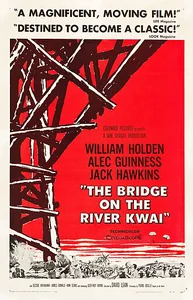
The real story doesn’t match the Hollywood version. The famous 1957 film “The Bridge on the River Kwai” gave a fictional account where a British colonel helps the Japanese build a better bridge, only to have it destroyed by commandos. In reality, the bridge was subjected to Allied bombing in early 1945, which damaged it severely. The Japanese repaired it with whatever they could find—part of the steel spans you see today are replacements, simple and practical. After the war, the bridge became a permanent link in Thailand’s railway network, and it’s still used daily by trains heading south. The nearby Kanchanaburi War Cemetery holds the graves of nearly 7,000 POWs who never went home. The bridge stands as their memorial, not just a tourist snapshot.
When you visit, the first thing you need to do is walk across it. The track is open to pedestrians, and there’s no ticket gate, no security checkpoint. You’ll follow the narrow walkway of wooden planks set between the rails, and you’ll quickly learn to watch your step. The gaps between sleepers reveal the river far below—about eight meters down, which feels higher once you’re standing there. Trains still cross the bridge, so keep your ears open. When one approaches, you’ll hear the rails start to hum, and the bridge itself seems to shiver. Put yourself in one of the safety alcoves along the sides and let the train thunder past. It’s a thrill, but it’s also a reminder of the bridge’s original purpose, and it feels far more real than any museum display.
Take your time on the bridge itself. The middle span is the classic photo spot—you get a dramatic straight-down view of the water and a sense of being suspended between jungle and river. On the other side, you’ll find a few low buildings, including a small museum and a souvenir market. The museum is modest, but the photographs and personal letters from POWs are deeply moving. You don’t need more than an hour and a half to cover the bridge and museum, though you could easily linger for two hours if you let yourself sit and absorb the atmosphere. There’s no entrance fee to walk the bridge; whatever you spend is up to you—donations, food, or a ticket on the historic train if you fancy riding across.
For a different angle, walk a little downstream along the riverbank. There’s a small, unmarked path that leads to a quiet viewpoint where you can see the bridge in its full sweep. The best time for photos here is late afternoon, when the low sun makes the steel glow and the shadows stretch long across the water. Or, if you’re feeling adventurous, hire a longtail boat from the pier and cruise under the bridge itself. From below, you see the trusses close together, the train tracks overhead, and you understand why it took so much brute force to build. Look closely at the supports, and you’ll notice the weathered, mismatched joinery—a silent clue to its repair history.
One hidden gem catches almost everyone off guard: the original weight-bearing pillars of the wooden bridge still jut out of the river, a few meters upstream. The locals call them the “old bridge remains,” and they’re only visible when the water is low. If you spot them, you’re seeing the true story of this place. The wooden bridge was the first one, the one the POWs built with their hands, and its worn stone piles now serve as a quiet, unofficial memorial. Most visitors hurry past, but those who stop to look down are rewarded with a direct link to the past.
This is a place that stays with you long after you leave. The Bridge on the River Kwai isn’t just a landmark to tick off your list. It’s a chance to stand on history, to feel the sun-heated steel beneath your palms, and to remember the thousands of lives that were traded for those iron spans. Bring your camera, bring your curiosity, but also bring a moment of silence. You’ll find yourself pausing in the middle of the bridge, just listening to the wind and the water, and understanding that some places are more than just beautiful—they’re important.
