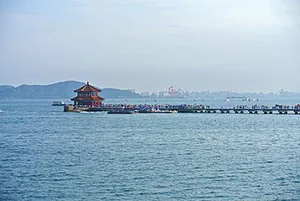
On a bright morning, Qingdao Pier looks the way a memory should: long, impossibly slender, and made of weathered planks that seem to float above the Yellow Sea. It stretches 440 metres out from the shore, with a quiet octagonal pavilion waiting at its tip. It doesn’t tower over the city. It reaches out to it, gently, the way a hand reaches for water. For first-time visitors, this is the true first taste of Qingdao’s personality — a city that fell in love with the sea long before the beer bottles made it famous.
Locals call it Zhanqiao, a matter-of-fact Chinese word that simply means pier, yet they treat it as a treasure. The whole span is free. The air smells of salt and fresh-cut wood and cooking from the snack stalls at the land end. Seagulls cut through the breeze. Couples pose in wedding clothes while photographers crouch for low-angle shots. Elderly fishermen lean against the railings with patient lines. By the time you reach the green-glazed pavilion at the far end, the city’s glass-and-steel towers have turned soft and hazy, and the sea has become the whole horizon.
Qingdao Pier was not raised as a romantic escape. It began in 1892 as a military supply wharf for the Qing imperial northern navy. At that time, Qingdao was still a modest fishing town, and the simple steel-and-wood structure was its first real handshake with international shipping. The original pier was only about 200 metres long, barely half the length of today’s walk. It carried soldiers, ammunition, and last-minute orders in an era when the sea was the only reliable road to the outside world.
Then the Germans arrived. In 1898, the German Empire took control of the area and turned Qingdao into a fortified port. The pier was lengthened, and a railway line was driven straight onto it so ships could offload cargo and troops with brutal efficiency. Under German hands, it became an industrial promise as much as a landmark. After Japan replaced Germany in 1914, the pier remained a strategic prize, but through each occupation it stayed surprisingly open to the public. For local families, it was the one place where anyone could walk out and breathe, no matter who held the flag.
The modern pier is largely a product of 1931. That year, the city government extended the wharf to its current 440 metres and rebuilt the surface with a stronger concrete-and-stone foundation. In 1933, the octagonal Huilan Pavilion rose at the very end, crowned with a bright glazed roof in deep green. The name Huilan means returning waves, and on a windy afternoon you’ll see why: swells curl around the small pavilion and appear to double back toward the shore. It was designed as both a lookout and a shelter, and it has been watching over the bay ever since. Decades of typhoons have damaged the pier, and restorations have largely stayed true to that 1930s vision.
Start at the shore and simply let the pier do its work. The walk to the pavilion takes fifteen unhurried minutes, and the return trip is just as easy. You should reserve at least an hour in total, more if you like to photograph. The pier is open all day and every day, and no ticket is required. When the line to enter Huilan Pavilion builds up, be patient; the interior is small and the reward is worth it. Inside, follow the narrow staircase to the upper gallery and drink in a 360-degree view of the bay and the city’s famous red-roofed skyline.
Photographers, take note. The definitive shot of the pier needs a bit of distance: stand on the shore to the northwest and point your lens southeast so the walkway cuts diagonally across the frame, leading the eye to the pavilion. For a more personal angle, wait until the end of the pier and shoot back toward land, letting the pavilion’s red columns frame passing boats and seagulls. Sunrise is a dream because the light hits the pavilion directly from the sea, while sunset paints the sky in copper and wine behind the city.
Most people rush straight out and back, so here’s the advice I’d give a friend: pause. At low tide, lean over the side and watch the water lick the barnacled legs of the pier below; the sound is strange and intimate, a quiet heartbeat beneath the tourist noise. If you arrive early on a weekday, around six in the morning, the place is nearly yours. You’ll see local walkers doing their laps, a couple of early birds, and the sea in its softest mood. That’s the Qingdao Pier you’ll remember long after the day-trippers have gone.
One more little secret: the pier is at its most theatrical in winter, from November to March, when migrating gulls swirl around the railings and the pavilion lights glow through chalk-grey mist. You don’t need to buy anything, just a cheap loaf to tear and toss. The gulls turn the air into a feathered festival. It’s a reminder that this famous landmark isn’t really about the past. It’s about the people, the salt spray, and the beautiful, silly joy of standing at the edge of China and looking out at the endless water.
