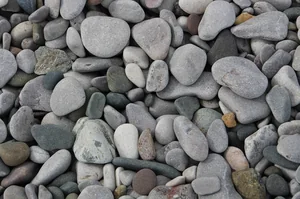
There are beaches, and then there are beaches that make you feel like you’ve wandered onto the set of a science fiction film. Golden Pebble Beach, or Dalian Jinshitan, is exactly that kind of place. Tucked along the jagged coastline of northeast China’s Liaoning Province, this sprawling scenic area isn’t your typical suntan-and-splash kind of shore. Instead, it’s a wild, windswept open-air museum where ancient rock formations twist, bulge, and jut out of the sea like sleeping dinosaurs. The first thing you notice is the color: honey-toned pebbles scattered across a crescent of sand, glowing under the northern sun, which is how the place earned its name.
But keep walking, and the real drama unfolds. Towering cliffs of striated gray and red sandstone rise dozens of meters above the surf, carved by wind and waves into shapes that defy logic. There’s a rock that looks like a giant turtle straining toward the water, another that resembles a dragon leaning down for a drink, and one particularly famous formation that seems to be a massive dinosaur’s head with its snout resting on the shoreline. Add the roar of the Bohai Sea crashing into these ancient monoliths, and you’ve got a sensory experience that stays with you long after you leave. It’s no exaggeration to call Golden Pebble Beach one of China’s most spectacular natural wonders.
Yet this place isn’t just about looks. It’s a literal page out of Earth’s autobiography, revealing nearly a billion years of geological history through rocks that predate the dinosaurs by a stretch you can’t quite wrap your head around. For global travelers, it offers a chance to witness something far more profound than a pretty postcard: the raw, slow, relentless power of nature.
The story of Golden Pebble Beach begins some 600 to 800 million years ago, in the Sinian Period, when this entire region lay submerged beneath a shallow, oxygen-poor sea. Over millennia, layers of mud, sand, and calcium carbonate settled at the bottom, compressing into the sedimentary rock you see today. When the sea eventually retreated, what remained was an extraordinary jigsaw puzzle of rock formations, including some of the oldest fossil-bearing strata in all of Asia. But no one really paid much attention until the early 1980s, when a geological survey team stumbled upon the site during a routine mapping exercise. They were stunned—not just by the beauty, but by the scientific value. This wasn’t merely a scenic coastline; it was a pristine relic of a world that existed long before complex life found its footing on land.
Following that discovery, the Chinese government moved quickly to protect the area. In 1988, Golden Pebble Beach was designated a national scenic zone, and just two years later, in 1990, it was formally opened as a public tourist resort. But the real milestone came in 1999, when it earned the title of National Geological Park, cementing its reputation as one of China’s most important outdoor laboratories for geologists. Since then, it’s been upgraded to a 5A Tourist Attraction—China’s top tier of scenic quality—and it now draws travelers from all over the world. Locals still tell stories of how, in the early days, the only way to reach the remote shoreline was a bone-rattling dirt road. Today, the journey is easy, but the rocks themselves remain perfectly, gloriously untouched.
So what should you actually do once you’re inside? Start with the greatest hits, no question. The most iconic rock is the Dinosaur Exploring the Sea, a massive headland whose curved snout dips right into the waves. It’s best in the late afternoon, when low sunlight paints the ridges copper and the water around it dazzles. Next, shuffle over to the Turtle Rock, also called the Turtle-Back Stone—an enormous block of mudstone covered in a pattern of polygonal cracks that looks absurdly like a reptilian shell. Geologists love it because it’s one of the best-preserved examples of ancient mud cracks in the world. But you don’t need a degree to appreciate it. Just stand there and let your eyes trace the lines; it’s mesmerizing.
Then, of course, there’s the beach itself. Unlike tropical white sand, this shore is made of smooth, golden pebbles that click and clatter underfoot with every wave that sweeps in. It’s a sound that’ll stick with you—like nature’s own wind chimes. If you’re up for a bit of exploring, head along the northern walking trail past the main formations. You’ll find smaller coves, unmarked viewpoints, and tidal pools teeming with tiny crabs and snails. A decent pair of walking shoes is a must, because the rocky paths can be rugged. Plan to spend at least four to five hours, half a day really, to cover the main highlights without rushing. The site is generously sized, so if you’re a geology buff or a photography fanatic, you could easily burn a full day here.
Ticket wise, plan on around 120 yuan per person for the geological park core area, which includes the main cliffs and beach. Shuttle buses inside run extra but blessedly, they’re cheap and frequent—grab one if you’re short on time or just tired of the sun. And speaking of spots for your camera, don’t miss the viewpoint near the lighthouse at the far northern edge. From there, you get a sweeping panorama of the entire bay, with the rock formations scattered below like a forgotten diorama. Sunrise is magical, but if you’re not a morning person, the golden hour before sunset is equally killer. One hidden gem? Walk to the less-visited southern cove, where locals like to fish. It’s quiet, serene, and you can often see white seagulls wheeling overhead while the sea claps against the rocks.
Golden Pebble Beach isn’t a place you just glance at and move on. It demands a little patience, a little imagination, and a good pair of eyes to truly appreciate what it’s offering. In an age where so many attractions feel engineered for social media, this one feels beautifully, irreverently ancient. Whether you’re tracing the fossilized ripples of a vanished sea or just listening to the pebbles tumble in the surf, you’ll leave with the unshakable feeling that you’ve touched something permanent in a world that’s constantly changing. That’s a rare gift—and one worth traveling halfway across the globe for.
