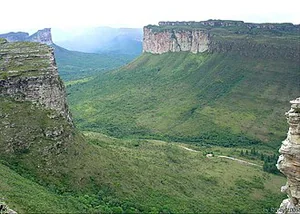
Tucked deep in the heart of Bahia state, Chapada Diamantina National Park feels less like a place on a map and more like a secret carved straight into the Earth. Imagine vast table-topped mountains rising like ancient fortresses, their sheer cliffs painted in shades of rust and amber. Imagine waterfalls so tall they turn to mist before they hit the ground, and caves so dark they swallow every sound but your own breathing. This is the Chapada Diamantina — a land of hidden valleys, emerald pools, and trails that have a way of making you feel both tiny and completely alive.
The park’s name translates literally to ‘Diamond Highlands,’ and it fits. It’s a place where cliffs drop hundreds of meters into canyons, where rivers vanish into limestone and reappear miles away, and where the air itself feels electric with possibility. Travelers come here to hike, to swim, to stand at the edge of dizzying precipices, and to disconnect from everything except the rhythm of their own footsteps. But no photograph truly captures it. You have to feel the cool spray of a waterfall on your face at the bottom of a narrow gorge, or watch the sunset turn the Morro do Pai Inácio into a silhouette of gold, to understand why this place lingers in your bones.
This isn’t a single attraction so much as a sprawling, wild playground. It’s a place for the curious, the adventurous, and anyone who’s ever dreamed of walking into a postcard. And once you’re there, you’ll quickly realize that the Chapada doesn’t give up its secrets all at once — it makes you work for them, one steep climb at a time.
Like so many wonders of the New World, this landscape’s history is woven with ambition, greed, and an astonishing stroke of luck. Long before it became a national park, these mountains hid something beneath their rocky skin: diamonds. In the 1840s, a wave of garimpeiros — itinerant diamond hunters — descended on the region, scraping riverbeds and digging into hillsides in search of fortune. The town of Lençóis, once a modest settlement, swelled into a bustling frontier hub, its streets filling with prospectors, merchants, and freed slaves who’d come to risk everything on the glimmer of a stone. These miners didn’t find great diamond fields in the traditional sense; instead, they found something just as valuable: a network of rivers and caves that had trapped gemstones over millions of years.
The diamond rush didn’t last forever, but it left a permanent mark. The many trails that crisscross the park today were originally footpaths carved out by miners hauling their wares. You’ll see the remnants of that era in dry-stone walls, abandoned mine entrances, and the ghostly ruins of old lodges. Even the park’s most iconic feature — the mighty Fumaça Waterfall, which plunges a breathtaking 380 meters — owes its fame partly to those early explorers who used its mist as a landmark. By the mid-20th century, the diamonds had mostly dried up, and the region fell quiet. Then came the 1980s, when conservationists recognized the area’s unique biological and geological importance. In 1985, Chapada Diamantina National Park was officially established, protecting roughly 1,520 square kilometers of this remarkable terrain. Today it’s a refuge, not just for jaguars, maned wolves, and hundreds of bird species, but for anyone seeking an encounter with the sublime.
The first thing to know is that Chapada Diamantina rewards those who give it time. A rushed visit will only give you a taste — you want at least three or four days to fully sink into its rhythm. Start with the iconic hikes, but don’t treat the park like a checklist. Base yourself in the charming village of Vale do Capão or the town of Lençóis, and then explore outward. The trek to the base of Fumaça is a must. It’s a demanding, four-to-six-hour climb through scrubby forest and rock, but the payoff is unforgettable: standing opposite one of Brazil’s tallest waterfalls, watching the water disappear into a column of cloud that never quite settles. For something less punishing, the viewpoint atop Morro do Pai Inácio offers a panoramic sweep over the entire plateau — arrive just before sunrise or late afternoon for the best light, and to catch the mist rolling across the valleys.
Caves are another of the park’s otherworldly highlights. Gruta da Lapa Doce is a cavernous labyrinth of stalactites and stalagmites, where you can walk through passages big enough to swallow a cathedral. More mysterious is Poço Encantado, an underground pool of such crystalline clarity that when the sun hits it just right between April and September, it transforms into a brilliant blue mirror. Many of the park’s sites don’t require a fixed entry ticket, but you’ll need to register at one of the official visitor centers — and for certain caves and remote trails, hiring a certified local guide isn’t just advisable, it’s mandatory. It’s a small price to pay for the insights a guide brings, from pointing out medicinal plants to explaining how these landscapes formed 600 million years ago.
When it comes to photography, the golden hours are pure magic. Fumaça’s viewpoint is a dramatic shot from above, but the real treasure is the so-called ‘Dome of Fog’ phenomenon — when cold air rolls in during the wet season and creates a sea of clouds below the cliffs. If you’re lucky enough to witness it, you’ll get pictures that look like they belong on another planet. The Pati Valley, often called one of the most beautiful treks in South America, is a secret gem for those who prefer solitude. It’s a multi-day hike through remote communities where donkeys still carry supplies and neighbors greet you with a warm ‘bom dia.’ Along the way, you’ll discover waterfalls you won’t find in any brochure — pools you can swim in completely alone, surrounded by the chorus of birds and insects.
Don’t overlook the smaller, nameless wonders either. There’s a quiet joy in pulling over at some unnamed stream, shedding your boots, and cooling your feet in water that tastes like rain. Keep an eye out for the rare and timid picacazinho, a small bird endemic to this region, and for the mischievous capuchin monkeys that sometimes cross the trails. Reserve your energy for the afternoon, when the heat hits its peak, and find a shady spot to simply breathe in the scent of wild thyme and damp earth. Chapada Diamantina isn’t just a park — it’s an invitation to slow down, look up, and let the scale of this staggering landscape rearrange your sense of what’s possible.
