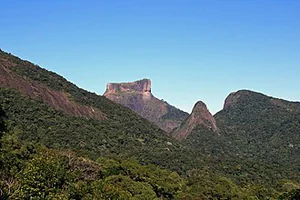
If you’ve ever seen postcard photos of Rio de Janeiro, you’ve already glimpsed it—the lush, rolling mountains that rise like green dinosaurs behind the city’s famous beaches. That forest covering the slopes around Corcovado isn’t wild leftovers; it’s Tijuca National Park, the world’s largest urban forest. Step inside, and the roar of traffic fades into a symphony of birdsong, waterfalls, and howler monkeys crashing through the canopy. You’re still fifteen minutes from downtown Rio, but you might as well be a thousand miles away.
Thick, tangled vines drape over mossy boulders. Ferns unfurl to waist height. The air smells of wet earth and orchid blossoms. Butterflies flicker across the trail like bits of confetti. And when you emerge from the shade, you’ll see Rio sprawled below—skyscrapers, beaches, the bay—all framed by the same lush, wild hills you’re standing on. It’s a strange and wonderful irony: a human-made forest that now feels more primal than almost anything else in the city.
But here’s the twist: this forest almost didn’t exist. You’re not walking through an untouched wilderness; you’re walking through one of the world’s greatest acts of environmental redemption.
Much of the area around Rio was completely cleared in the 1800s, first for sugarcane and coffee, then for charcoal. The hillsides turned to moonscapes, and the streams that fed the city’s drinking water began to vanish. A severe drought in 1843 made matters worse—people were literally fighting over muddy puddles. The city was on the verge of crisis.
So Emperor Pedro II stepped in. In 1861, he ordered the reforestation of the entire Tijuca Massif. The task fell to Major Manuel Gomes Archer, a military engineer with a stubborn streak. From 1861 to 1874, he and a small crew—mostly enslaved workers—planted over 100,000 native seeds and seedlings. They built drainage channels, dug terraces, and hauled water by hand. It was an ecological marathon, decades before the word ‘forestry’ even existed.
Their work paid off. The water returned. The soil held. Over the next century, the forest regenerated, expanded, and swallowed old plantations and quarries. In 1961, the area became a national park—officially protecting this man-made miracle for generations to come. Today, it’s part of the Rio UNESCO World Heritage Site, and it shelters jaguars, sloths, and hundreds of bird species. Not bad for a forest that was once a barren mountain of red dirt.
The park surrounds you, but don’t expect a single manicured, everything-mapped venue. Tijuca is rugged, sprawling, and delightfully confusing at times. The heart of the park—the Floresta sector—is the easiest to explore, with paved roads and signposted trails that wind past waterfalls, caves, and viewpoints.
The classic first stop is the Cascatinha Taunay, a 30-meter waterfall that tumbles into a cool green pool. It’s postcard-perfect, and a five-minute walk from the main road. Just up the hill sits the Mayrink Chapel, a little neo-Gothic church from 1864, covered inside and out with murals by the legendary Brazilian artist Cândido Portinari. Stop there, inhale the quiet, and you’ll feel the forest close in like a loving arm.
Then there’s the hike everyone wants: the climb up Pico da Tijuca. It’s a tough but rewarding scramble—about 2.5 kilometers of switchbacks and stone steps, gaining 450 meters in altitude. The view from the 1,022-meter summit puts the whole of Rio at your feet, including the Christ the Redeemer statue, tiny and white in the distance. If you’re not in hiking shape, skip this one. But if you are, do it early in the morning when the forest is foggy and the trails are empty.
Now, let’s talk about time. You can rush through the main sights in three hours, but that’s like sprinting through a museum—you’ll miss everything. Give yourself at least half a day. A full day is better, especially if you want to hike, swim in natural pools, and picnic under a waterfall.
Ticket information is refreshingly simple: the park is free. There’s no gate fee, no turnstile, no ‘one-day pass’ nonsense. You’ll only pay for parking at a few specific lots (around R$10–20) and for special activities like climbing or guided tours. Just bring your passport or ID if you’re planning to do serious trails, because park rangers sometimes check.
Best photo spots? Don’t miss the Vista Chinesa, a little Chinese-style pagoda perched at 390 meters above a curve in the road. From there, you get that famous sweeping view of the city, the lakes, and the sea—sunset makes it absolutely glow. Another stunner is the Mesa do Imperador, a rock ledge with a panoramic view that’s far less crowded than the better-known lookouts.
If you want to go deeper, hunting down hidden gems is half the fun—and Tijuca has plenty. The Gruta Luís Fernandes is a deep, dark cave that local legends say was once a hideout for runaway slaves? Actually, it’s a natural quartzite grotto, and you can scramble inside with a flashlight. Then there’s the Cachoeira do Horto, a serene waterfall tucked at the park’s edge, where locals come to soak. And for the adventurous, the abandoned ruins of the Laranjeiras coffee plantation lie hidden in the forest, crumbling and overgrown—a silent, moody reminder that this whole sanctuary was once a farm.
Just remember: you’re sharing this enormous garden with its wildlife. Monkeys will swipe your snacks if you’re careless. And those friendly, sniffly coatis will raid your backpack without a moment’s guilt. It’s not their fault—they’re used to visitors. But keep your food zipped, and you’ll get a better, wilder experience.
There’s a deeper satisfaction to visiting Tijuca. You’re standing in a forest that’s both natural and man-made. You’re a living witness to the fact that a damaged landscape can heal, given time, hard work, and a little luck. That’s not just a great afternoon in Rio—that’s a rare chance to walk inside a story of hope. And when the city hum returns at the trailhead, you’ll feel it differently, like you’ve recharged your own inner forest. Go meet the trees. They’ve done it before, and they’re more than happy to help you remember how.
