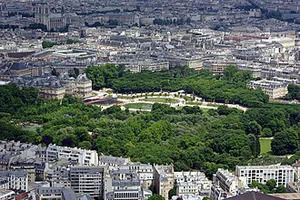
There’s a moment when you walk through the wrought-iron gates of the Luxembourg Gardens and the city’s noise simply melts away. It’s not just a park, you quickly realize, but a small universe unto itself—a place where Parisians read, jog, argue over chess moves, and push miniature sailboats across an octagonal pond. The air smells of chestnut blossoms and fresh bread from nearby boulangeries, and the grand palace facade glows golden in the afternoon sun. This is the Left Bank’s crowning jewel, a garden that feels both monumental and intimately welcoming.
For nearly four centuries, this haven has drawn everyone from aristocrats to artists, from students to strolling families. It’s a living postcard, yes, but one that changes with every season and every hour. Morning light filters through lime tree alleys; lunchtime brings a rush of workers seeking shade; evening turns the lawns into a soft, romantic glow. Whether you come for the famous chairs (which you can move wherever you like) or simply to watch the world drift by, the Luxembourg Gardens promise something rare: a moment of pure Parisian serenity.
But how did this exquisite patch of earth come to be? It’s a tale of royal longing and political upheaval. In 1612, Marie de’ Medici, the widowed queen of France and a Florentine by birth, grew homesick for her native Italy. So she had a magnificent palace built for herself, modeled on the Pitti Palace in Florence, and commissioned a sweeping garden to match. The result, completed over years and expanded under later reigns, was a French interpretation of Italian grandeur: geometric parterres, a grand central fountain, and terraced views that seemed to stretch forever.
The palace and garden didn’t stay royal for long, though. During the French Revolution, the Luxembourg Palace became a prison, and the gardens were nationalized. Later, Napoleon Bonaparte made the palace his Senate seat, a role it still plays today. In the 19th century, architect Jean-François-Thérèse Chalgrin (yeah, the Arc de Triomphe guy) oversaw a major redesign, adding the famous orchard and reshaping the terraces. Through it all, the gardens survived wars, riots, and urban sprawl, slowly morphing from a private royal retreat into the beloved public park we know today. The 20th century brought more layers: the ornate Medici Fountain, tucked away like a hidden grotto, and the statues of French queens that line the central avenues, each one a silent storyteller.
So, what should you actually do once you’re inside? First, don’t rush. The Luxembourg Gardens reward slow exploration, so carve out at least two to three hours—though you could easily spend half a day here. Start near the main gate on Boulevard Saint-Michel, then wander toward the Grand Bassin, that iconic octagonal pond where children rent wooden sailboats on sticks and push them across the water with all the seriousness of professional sailors. It’s one of the most joyful sights in all of Paris, and honestly, you might find yourself cheering for a gust of wind. Around the pond, you’ll find the movable green chairs—grab one, drag it into the sun, and just sit. The Parisians do it, and it’s the best people-watching in the city.
From there, make your way to the Medici Fountain, tucked into the northeast corner. It’s a dreamy, moss-covered nook with a statue of Polyphemus and a long shadowy basin that feels lifted from a romantic poem. Many visitors miss it, so you’ll often have the spot all to yourself, save for a few turtles swimming lazily below the surface. Don’t forget the palace side of the garden either. The front lawn is the perfect spot for a picnic (yes, you’re allowed, just keep off the grass itself), and the sweeping view of the palace with its symmetrical wings is absolutely postcard-worthy. For the best photo, stand at the center of the Grand Bassin and face the palace—early morning or late afternoon light works magic.
Now, for the hidden gems. Most tourists never make it past the fountain, but the garden is far bigger than it looks. Venture into the southwest corner and you’ll find the apiary, a working beekeeping school that’s been buzzing since the 1850s. Nearby, there’s a tiny fruit orchard full of pear and apple trees, and a sunflower-lined path that seems to lead nowhere yet feels like a secret. Check the south side for the bandstand, where free concerts sometimes pop up, and look for the statue of Delacroix, complete with a stone lion resting at his feet. That’s also where you’ll find the old carousel—a charmingly vintage ride, but the real treat is watching the kids try to snag rings with a stick as they go round.
Entrance to the gardens is completely free, and it’s open nearly every day of the year (though the hours shift slightly with the seasons, so a quick glance at the official schedule is smart). The palace itself isn’t open to the public except for occasional exhibitions or when the Senate is in session, but you don’t need to go inside to feel the grandeur. There are public toilets near the pond, and a few kiosks sell crepes, ice cream, and coffee, though the prices are touristy—you’re better off grabbing a baguette sandwich from a nearby café and claiming a chair. The garden also has two play areas for kids, a small climbing structure, and, of course, those rented sailboats. If you’re visiting with children, budget extra time. They won’t want to leave.
One last thing, a tiny ritual that regulars know: find a chair near the Grand Bassin, sit down, and close your eyes for just a minute. Listen to the rustle of the chestnut leaves, the distant laughter, the splash of the fountain. When you open your eyes, you’ll finally get why this place has captured hearts for over 400 years. The Luxembourg Gardens aren’t just a landmark; they’re the very pulse of Parisian life—grand, imperfect, and utterly unforgettable. Bring a book, a friend, or just your wandering thoughts, and let the garden do the rest.
